
A Modest Proposal
For preventing the children of Appalachia from being a burden on their parents or country, and for making them beneficial to the public

Author’s Note: A friend asked me what a modern version of Jonathan Swift’s original Modest Proposal would be about. This is my answer.
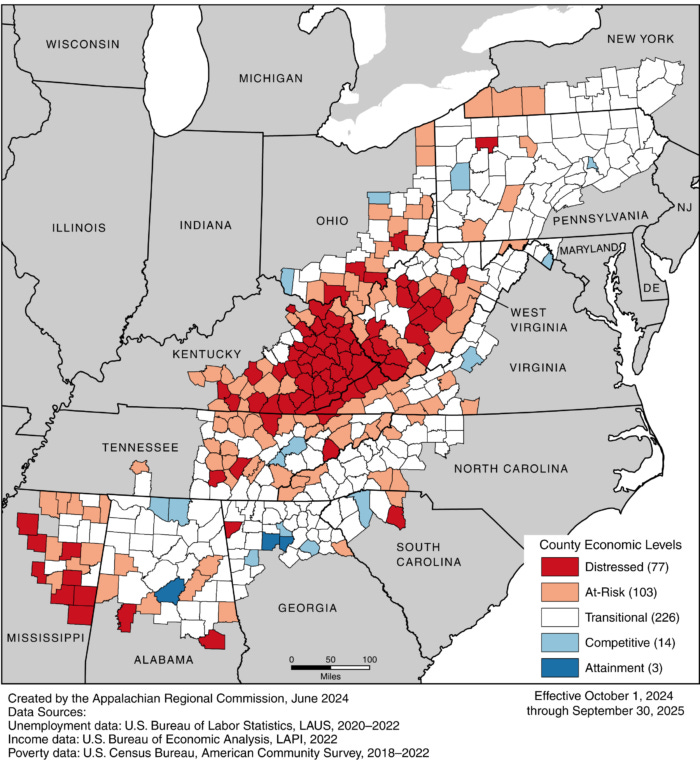
APPALACHIA is as much a geographic region as it is a cultural region of America. As one observer put it:
If ethnicity is one side of the coin, then geography is the other. When the first wave of Scots-Irish immigrants landed in the New World in the eighteenth century, they were deeply attracted to the Appalachian Mountains. This region is admittedly huge—stretching from Alabama to Georgia in the South to Ohio to parts of New York in the North—but the culture of Greater Appalachia is remarkably cohesive. My family, from the hills of eastern Kentucky, describe themselves as hillbillies, but Hank Williams, Jr.—born in Louisiana and an Alabama resident—also identified himself as one in his rural white anthem “A Country Boy Can Survive.” It was Greater Appalachia’s political reorientation from Democrat to Republican that redefined American politics after Nixon. And it is in Greater Appalachia where the fortunes of working-class whites seem dimmest. From low social mobility to poverty to divorce and drug addiction, my home is a hub of misery.
James David Vance, Hillbilly Elegy
Whereas other geographic regions of America have been reconstituted as cultural symbols, Appalachia remains firmly rooted in its sense of place. The American West was long won; the Atlantic and Pacific Seaboards consolidated into coastal elites; and the Midwest cemented as the vague moral center of the American universe. But the sound of Appalachia, with the lach pronounced like latch, still feels real.

Blessed by coal and kissed by despair, Appalachia is the Donbas of America. Their parallel histories bear the scars of exploitation over centuries, with the resentment of metropolitan DC and Kyiv a common motif. And their mutual fortunes have always been yoked to the global flow of commodities: Appalachia struck its coal boom before the Donbas did, while the latter drew the ill fortune of experiencing the opioid crisis first.
Meteliuk: Ukraine’s high rate of HIV is mostly driven by injection drug use. We had a huge epidemic of opioid drug use in Ukraine after the Soviet Union collapsed in 1991. Ukraine was in the middle of drug trafficking routes from Afghanistan to European countries, but lots of drugs stayed in the country, leading to a dramatic increase in opioids and injection drug use.
Before the 2014 conflict, the Donbas area—which is the Donetsk and Luhansk regions—and Crimea were responsible for almost one-third of all patients taking opioid agonist therapies in Ukraine. Those are highly drug-using regions because they border Russia, and at that time, most of the drugs we had in the country were coming from Russia. So those areas were responsible for a large share of opioid treatment patients in general.
Interview with Anna Meteliuk and Danielle Ompad, How War Worsened the Opioid Crisis in Ukraine
In Ukraine, drug addiction fades into the background amid so many wartime crises facing the country. While in the United States, the issue of opioid deaths has maintained its relevance in part by serving as a visceral justification for new politics of immigration and foreign policy.
Although overdoses have declined from their peak, the matter remains shameful. In a supposedly rich nation—the richest of them all—it is a bitter pill to swallow, when walking past a listless body lain about some Main Street downtown or driving by a decrepit house in the holler, to know that these belong to fellow human beings.
The toll of addicts strain the families and communities that still love them, and their loss tests the fierce independent values of Appalachia with its mistrust of outside intervention in a most macabre fashion.
We can no longer suffer gradualist approaches to the issue. There is no guarantee that economic or social developments can heal the situation in time, not when the scars become generational. It is a rolling catastrophe of which current measures of public assistance are unable to reverse.
Who is left to help?
Any industrialist, foreign or domestic, who might otherwise salivate at the prospect of hiring a ripe cohort of non-college-educated youth, is kept away by the self-fulfilling expectation that them young’uns can’t hold down a steady job. The returns on investing in such a blighted area seem even worse when the existing infrastructure throughout the region remains abysmal.
This leaves only the state. The history of major federal interventions in Appalachia has long been intertwined with national security interests. A dam along the Tennessee River was first authorized under the National Defense Act of 1916 signed by Woodrow Wilson. FDR then expanded the dam network under the New Deal with the creation of the Tennessee Valley Authority, which drafted the mighty waters of the Tennessee to feed the ravenous appetite for electricity required to process strategic elements of aluminum and uranium (into plutonium).
Yet even the state may be leery of taking on this economic transformation. The current mood is to reduce federal deficits, not expand them. The uncertain returns seem even less palatable when there are far more remunerative projects with existing political coalitions in support of them: re-armament, re-shoring semiconductor manufacturing, and renewable energy. Even strumming the heartstrings of the liberal international rules-based order fails to resonate nowadays. Ukraine is coerced to pawn its mineral rights so that it may continue in its existential war in support of American and European security interests.
Where the transactional eye of big business and the state have glazed over, I still retain the faith in egalitarianism inherited from our founding. I believe the young Appalachian is no lesser than any of their counterparts elsewhere in the nation. Their resourcefulness has kept them alive for generations while them jaspers (outsiders) looked down from on high.
There is only one way to force incumbent business and political interests to see the same value I see in my fellow Americans. According to the Appalachian Regional Commission (ARC), the Appalachian Region supported a population of 26.4 million in 2022. (For reference, Ukraine’s population was 41 million in 2022.) In crude dollar terms, should we value one human life at a meager $27,878.79, the Appalachian people would be an asset worth $1 trillion! This would be worth far more than any realistic assessment of the total mineral rights in Greenland and Ukraine combined!
The most expedient path to realizing this value is to look back to that peculiar institution of our history. Thus, I propose that we task ARC with re-introducing chattel slavery in the Appalachian region. The financial structure will be as follows. Initially, the newly enslaved will be owned by the state. However, the slaves will be auctioned competitively to private interests, who can more efficiently allocate their labor. This will avoid the main flaw of Southern slavery, the entrenchment of a sclerotic agrarian economy, as opposed to the North’s advanced industrial model.
At the outset, capitalizing the human reserve onto the Treasury’s balance sheet will reduce the need to issue bonds to fund the initiative, avoiding disruptions to the bond and currency markets.
As the auctions proceed, the government may even stand to gain from any price appreciation.
Amid an ongoing labor shortage, the timely reintroduction of slavery will supply the labor needed for aforementioned projects of re-armament, re-shoring semiconductor manufacturing, and renewable energy.
This will show to the world that our can-do Appalachian slaves are any less capable than their international counterparts, rekindling American greatness.
Appalachian slaves can also be transported out of the region, if need be, to address labor shortages elsewhere, such as in seasonal agricultural labor. This obviates the need for immigrant labor to fill these niches, a sore point of contention in domestic politics.
Appalachia is strategically located near key sources of hydroelectricity, natural resources, transport nodes, and vital cities, making it attractive to businesses seeking slaves.
There are myriad benefits to enslaved communities.
Slaves are liberated from a precarious life revolving around substance abuse and public assistance to enjoy the solid education and dignity of work.
To prevent the abuse of minors, the offspring of slaves must report to public or private education institutions, until they reach working age (15 or older, as varies by state law) and may then appreciate the dignified fruits of labor.
Tourism has been one of the few economic bright spots in the region, driving a boom in the short-term rental market that has persisted after Covid. Slavery would provide a vital workforce to develop real estate and reinvest these gains into local communities.
While this may sound to some like a radical proposal, the reintroduction of slavery is the most direct, expedient, and humane proposal to address the issue of economic blight and deaths of despair in the very heart of our country. No other alternative is feasible in our current political and economic climate. For example, some have suggested raising taxes on tax-dodging multinationals to fund regional economic development and healthcare, along with a more robust tax enforcement regime. No sane Administration would ever consider this if they wished to remain in office. In regards to labor and trade, the most sensible-sounding measures involve immigration reform and coordinating with allies to enact a nuanced industrial policy, one that address the United States’ strategic deficits in manufacturing while maintaining its international alliances in a stable regime of subsidies and tariffs. While such policies would theoretically promote overall economic growth, lending the government a free hand for social spending, there is no institutional capacity left in the state to enact any measure more sophisticated than a Hallmark card. The slavery proposal only requires the cooperation of the Treasury (and the potentially the Fed), which remain the only functioning agencies of our current government, and places the rest of the burden on the ever-efficient private sector to allocate slave labor.
The only significant challenge is the Thirteenth Amendment, which explicitly states:
Neither slavery nor involuntary servitude, except as a punishment for crime whereof the party shall have been duly convicted, shall exist within the United States, or any place subject to their jurisdiction.
Congress shall have power to enforce this article by appropriate legislation.
The simplest remedy would be to enact draconian laws on drug possession. With the advent of sophisticated surveillance technology, it should not be difficult to incriminate family members who refuse to turn in their loved ones as abetting drug felonies. Conceptually, this circumvents the major constitutional obstacle posed by the Thirteenth Amendment by reducing it to many small criminal cases against individuals. This may turn out to be difficult to scale, if opponents abuse the due process protections in the court system.
The more certain remedy is to abolish the Thirteenth Amendment entirely by amending the Constitution. Business interests can be relied upon to press Republican legislators to vote for abolition. Democratic legislators can also be enticed by ensuring that Appalachian slaves, which vote by large margins for Republicans, will be disenfranchised. This ensures survival of a weak Democratic party that may still hobble on in relevance as it solidifies its electoral control of the key swing state of Pennsylvania. The red state of West Virginia is also taken off the map entirely, along with small red chunks of Ohio, Kentucky, Tennessee, North Carolina, and Georgia. To sweeten the deal, Appalachian slaves can be counted as 60% of a person when apportioning House seats during redistricting.
Should the above remedies fail, procedures may be developed to systematically strip the citizenship of Appalachians. A coup may even be plotted to stage the secession of Appalachia, which would be governed by private interests after its reconquest by federal authorities. By the Alien and Sedition Acts, non-citizens may legally be detained to work as slaves. Since if they refuse to work, they would constitute a threat to national security by worsening the labor shortage required in America’s strategic manufacturing sector.
DISCLOSURE: I PROFESS IN THE SINCERITY OF MY HEART, that I have not the least personal interest in endeavoring to promote this necessary work, having no other motive than the public good of my country, by advancing our trade, providing for infants, relieving the poor, and giving some pleasure to the rich. I have no Appalachian relative or friend, by which I can propose to get a single penny; or trade to advance in a career of public service.